AI Tools for Medical Office Management in 2026

AI Tools for Medical Office Management in 2026
AI tools for medical office management are purpose-built software systems that automate administrative tasks like scheduling, billing, documentation, and patient communication to reduce staff workload and improve clinic accuracy. The best solutions in 2026 go far beyond basic automation. Tools like Nexus Intelligence Scribe, Agentman, Qlynic, and OmniMD AI Front Desk now handle entire workflows that once required multiple staff members. AI scribing alone saves clinicians up to 2 hours of documentation time daily. Purpose-built AI agents can automate 90% of insurance eligibility verification and cut claim denials by 65%. For healthcare administrators and practice managers, these numbers represent real relief from the daily grind of administrative overhead.
What are the top AI tools for medical office management?
The field of AI in healthcare administration breaks down into four distinct tool categories. Each targets a different part of your office workflow. Understanding these categories helps you pick the right solution without overspending or over-committing.
- AI medical scribing tools (e.g., Nexus Intelligence Scribe): These listen to patient encounters and generate clinical notes in real time, embedded directly in your EHR. They are specialty-aware, meaning they understand cardiology notes differently than orthopedic notes.
- AI back-office automation agents (e.g., Agentman): These handle insurance eligibility checks, claims submission, denial management, and patient inbox responses. They run 24/7 without human supervision.
- AI-native clinic operating systems (e.g., Qlynic, Mind2Motion Synapse): These unify scheduling, billing, EHR, and communications into one interface. When a patient reschedules via AI voice assistant, all related systems update instantly.
- AI virtual receptionists and chatbots (e.g., OmniMD AI Front Desk): These handle inbound calls, appointment booking, patient check-in, and after-hours inquiries automatically.
| Tool Type | Primary Function | Best For |
|---|---|---|
| AI Scribing | Clinical documentation | Reducing clinician burnout |
| Back-Office Agents | Eligibility, claims, denials | Billing teams and revenue cycle |
| Clinic OS | Unified workflow management | Multi-provider practices |
| Virtual Receptionist | Calls, scheduling, check-in | Front desk automation |
Pro Tip: Start with one tool category that addresses your biggest pain point. If your front desk is overwhelmed, deploy a virtual receptionist first. If your billing team is drowning in denials, start with a back-office agent.

How AI tools improve efficiency and reduce errors in medical offices
Efficiency gains from AI in healthcare administration are measurable and consistent across practice types. The core benefit is simple: AI handles repetitive, rule-based tasks so your staff can focus on patients.
Here is how the workflow improvements break down across key office functions:
-
Documentation: AI scribing tools like Nexus Intelligence Scribe generate structured clinical notes during the patient visit. Clinicians review and sign rather than write from scratch. This cuts charting time by 2 hours per clinician per day, which adds up to 10 hours per week per provider.
-
Insurance verification: Manual eligibility checks take 5–15 minutes per patient. AI agents complete the same check in seconds. Purpose-built AI agents reduce claim denials by 65%, which directly protects your revenue cycle.
-
Scheduling: AI-native platforms like Qlynic update provider schedules, patient records, and billing queues simultaneously. No more double-booking or missed follow-up appointments caused by disconnected systems.
-
Patient communication: AI chatbots send appointment reminders, collect intake forms, and answer common questions automatically. This reduces no-shows and cuts inbound call volume for your front desk staff.
-
Compliance tracking: Audit-logged AI decisions create a documented paper trail for every automated task. This protects your practice during compliance audits and reduces liability exposure.
“When AI handles eligibility verification and documentation simultaneously, the entire revenue cycle accelerates. Fewer denials, faster payments, and less staff overtime.” — Practice operations insight from Agentman AI
The compounding effect matters here. A practice that deploys scribing, eligibility automation, and smart scheduling together does not just save time in three places. It removes the coordination errors that happen when those three systems are disconnected.
What to look for when selecting AI solutions for clinics
Choosing the wrong AI platform costs more than the subscription fee. A disruptive implementation can set your practice back months. These are the factors that separate a good investment from a costly mistake.
- Modular vs. all-in-one: Modular AI adoption lets you deploy one specialized tool at a time, test results, and expand. All-in-one platforms promise everything but often require replacing your existing EHR, which is expensive and disruptive.
- EHR integration method: The best AI tools connect to your existing EHR via API or file parsing. Practices that avoid EHR replacement reduce migration costs and staff retraining time significantly.
- HIPAA compliance by design: Every AI tool you deploy must have HIPAA compliance built into its architecture, not added as an afterthought. Ask vendors for their Business Associate Agreement before signing anything.
- Audit trails: Every automated decision, whether an eligibility check or a patient message, must be logged. Audit-logged AI systems protect you during regulatory reviews.
- Specialty fit: A general-purpose AI scribe performs differently than one trained on cardiology or behavioral health notes. Match the tool to your specialty.
- Scalability: A tool that works for a 3-provider practice should also scale to 15 providers without a full re-implementation.
Pro Tip: Request a 30-day pilot before committing to any annual contract. Measure one specific metric, such as claim denial rate or documentation time, before and after. Real data beats vendor promises every time.
1. Nexus Intelligence Scribe
Nexus Intelligence Scribe is a specialty-aware AI scribing tool embedded directly in your EHR workflow. It listens to patient encounters and generates structured clinical notes in real time. Clinicians spend their time reviewing and approving notes rather than typing them. The result is up to 2 hours saved per clinician daily. For a 5-provider practice, that is 50 hours of recovered clinical time every week.
2. Agentman AI agents
Agentman delivers purpose-built AI agents for back-office healthcare administration. Its agents handle insurance eligibility verification, claims submission, denial management, and patient inbox responses. The platform automates 90% of eligibility checks and reduces claim denials by 65%. Agentman integrates with existing EHR systems via API, so you do not need to replace your current infrastructure to deploy it.
3. Qlynic
Qlynic is an AI-native clinic operating system that connects scheduling, billing, EHR, and patient communications in one platform. Its standout feature is real-time context sharing. When a patient reschedules, Qlynic updates all connected systems instantly, including the provider calendar, billing queue, and patient record. This eliminates the manual data entry errors that plague practices using disconnected software.
4. Mind2Motion Synapse
Mind2Motion Synapse functions as a unified AI operating layer for clinic workflows. It integrates EHR, CRM, scheduling, billing, payroll, and communications into a single login workspace. AI handles task prep, routing, and follow-up while preserving a full audit trail. Synapse is built for practices that want one screen to manage everything without losing compliance visibility.
5. OmniMD AI Front Desk
OmniMD AI Front Desk automates inbound calls, appointment scheduling, patient check-in, insurance verification, intake forms, and after-hours inquiries. It frees your front desk staff from phone-heavy, repetitive tasks so they can focus on in-person patient experience. OmniMD is a strong fit for high-volume primary care and specialty practices that receive large numbers of daily calls.
6. AI appointment setters and chatbots
Beyond the named platforms above, standalone AI appointment setters and chatbots serve practices that need targeted automation without a full platform change. These tools handle automated patient scheduling, send reminders, collect pre-visit information, and answer FAQs around the clock. They integrate with most major EHR systems and require minimal staff training. For practices focused on reducing no-shows and improving patient engagement, this category delivers fast, measurable results.
Key takeaways
The most effective AI tools for medical office management are modular, HIPAA-compliant systems that integrate with your existing EHR and automate specific, high-volume tasks to reduce errors and free staff time.
| Point | Details |
|---|---|
| Start modular | Deploy one AI tool targeting your biggest pain point before expanding to other functions. |
| Protect your EHR | Choose AI that integrates via API rather than replacing your existing system to avoid costly disruption. |
| Demand audit trails | Every automated decision must be logged to protect your practice during compliance reviews. |
| Measure denial rates | AI eligibility agents reduce claim denials by 65%, making revenue cycle the fastest ROI category. |
| Match tools to specialty | Specialty-aware AI scribing outperforms general tools for documentation accuracy and clinician satisfaction. |
My take on AI adoption in medical offices
I have watched a lot of practices chase the “one platform to rule them all” promise, and most of them regret it. The all-in-one pitch sounds appealing until you realize it means ripping out an EHR your staff has used for years, retraining everyone, and hoping the new system actually delivers. That is a painful, expensive gamble.
What I have seen work consistently is the modular approach. You pick the single most painful part of your workflow, whether that is documentation time, claim denials, or front desk call volume, and you deploy one focused AI tool to fix it. You measure the result. Then you expand.
The practices that succeed with AI in healthcare administration are not the ones with the biggest budgets. They are the ones with the clearest problem statements. A solo practitioner who deploys an AI scribe and recovers 2 hours of charting time daily has transformed their work life with one decision. A 10-provider group that automates eligibility verification and cuts denials by 65% has added real revenue without adding staff.
Auditability is the detail most vendors gloss over in their demos. You need every automated decision logged. Not because you expect problems, but because regulators will ask. Build that requirement into your vendor evaluation from day one.
Start small. Measure everything. Expand what works. That is the honest path to AI adoption that actually sticks.
— Wylie
How Aipeakbiz helps medical offices capture every patient opportunity
Medical offices lose revenue every time a call goes unanswered or a patient inquiry sits in a queue overnight. Aipeakbiz built its AI front desk for healthcare practices specifically to close that gap. The system answers calls and texts instantly, qualifies patient inquiries, and books appointments around the clock without requiring your staff to be available.
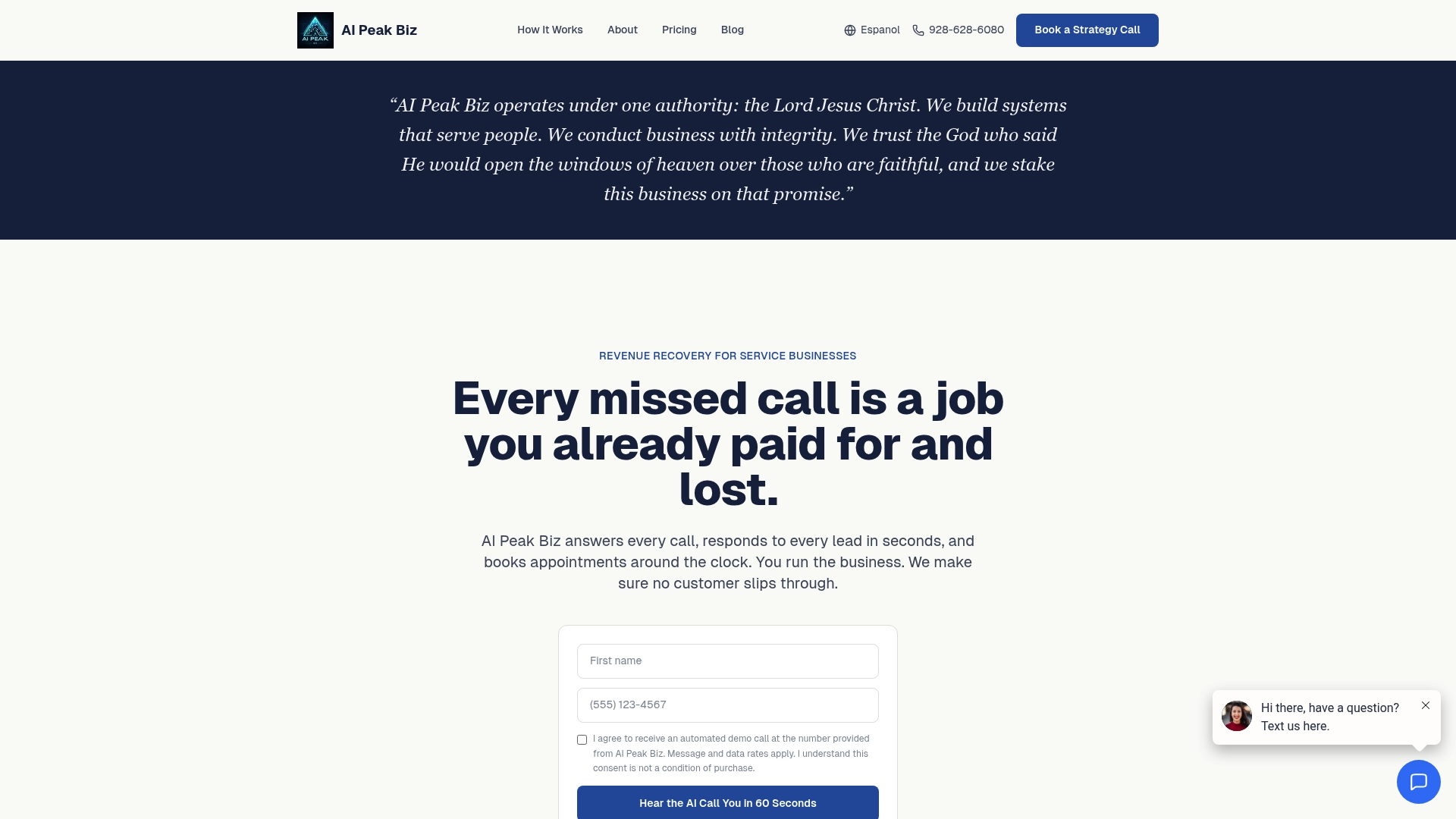
Aipeakbiz also offers a missed call text-back feature that re-engages patients the moment a call is missed, and an AI voice assistant that handles after-hours scheduling and patient questions automatically. For practices focused on medical office productivity tools that deliver real revenue recovery, Aipeakbiz provides a tailored setup with hands-on support. Contact Aipeakbiz today to see how these tools fit your practice.
FAQ
What are the best AI tools for medical office management?
The top tools in 2026 include Nexus Intelligence Scribe for documentation, Agentman for back-office automation, Qlynic and Mind2Motion Synapse for unified clinic operations, and OmniMD AI Front Desk for reception automation. The best choice depends on your practice’s specific workflow gaps.
How does AI reduce claim denials in medical offices?
Purpose-built AI agents automate up to 90% of insurance eligibility verification, which directly reduces claim denials by 65%. Catching eligibility issues before a claim is submitted prevents the most common denial causes.
Do AI tools for clinics require replacing my existing EHR?
No. The most effective AI solutions integrate with your existing EHR via API or file parsing. Replacing your EHR is disruptive and costly, and most leading AI platforms are designed to avoid that requirement entirely.
Is AI in healthcare administration HIPAA compliant?
HIPAA compliance must be built into the AI tool’s architecture, not added later. Always request a Business Associate Agreement from any vendor before deployment, and confirm that all automated decisions are audit-logged.
How quickly can a medical practice see results from AI tools?
Practices typically see measurable results within 30 days of deploying a focused AI tool. Documentation time reductions and claim denial improvements are among the fastest metrics to move after implementation.
Recommended
Want to see what your business is losing?
Take our free revenue assessment and find out how much missed calls, slow follow-up, and dormant leads are costing you every month.
Take the Free Assessment