Types of Home Service Customer Touchpoints: Full Guide

Types of Home Service Customer Touchpoints: Full Guide
A home service customer touchpoint is defined as every interaction a customer has with your business, from the moment they notice a problem to the final thank-you message after the job is done. These interactions collectively shape whether a customer trusts you, books again, and tells their neighbors about you. Every single interaction from yard signs to the final text is an opportunity to build trust or let revenue leak quietly. Most home service businesses lose customers not because of bad work, but because of broken or missing touchpoints at critical moments.
1. types of home service customer touchpoints mapped to the journey
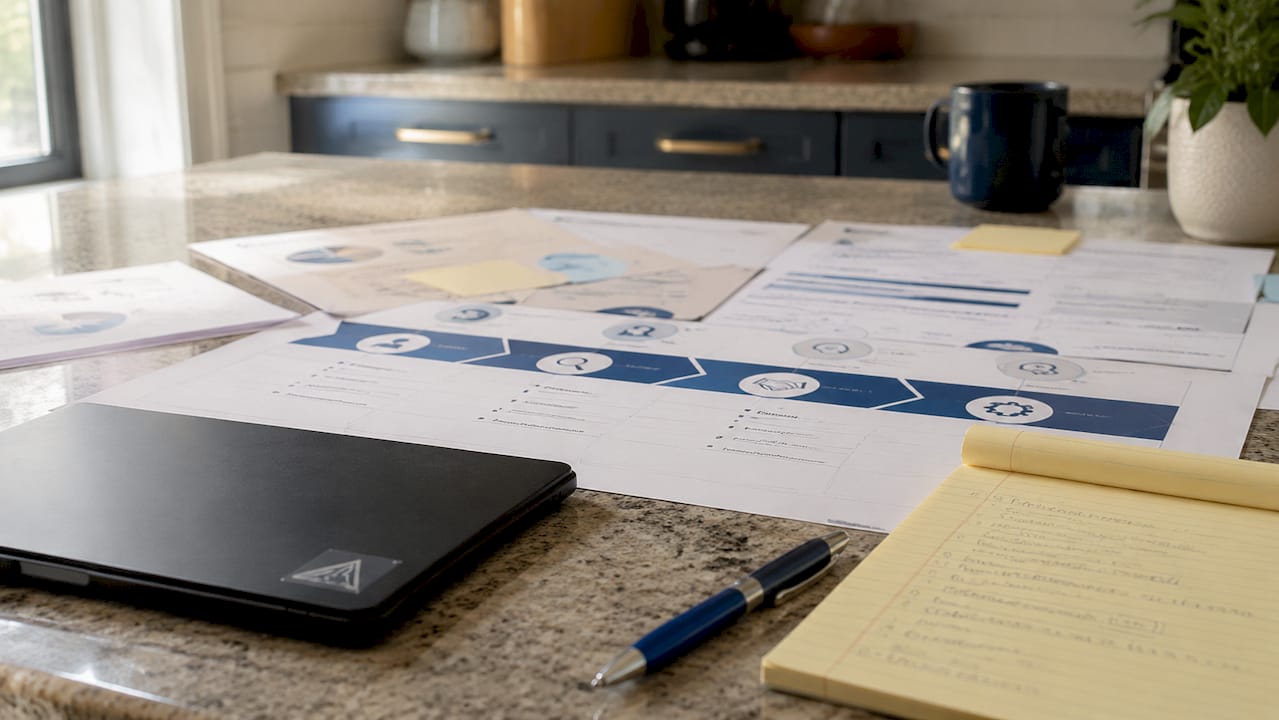
The industry term for this framework is the customer journey map, and the home services version has six phases: Awareness, Consideration, Inquiry/Lead, Appointment/Assessment, Presentation/Purchase, and Fulfillment and Advocacy. Each phase contains specific customer interactions that either build trust or allow revenue to slip away. Understanding which touchpoints belong to which phase is the first step toward fixing the ones that cost you the most.
Here is how the phases break down:
- Awareness: Yard signs, truck wraps, social media ads, Google Search results, word-of-mouth
- Consideration: Google Business Profile, online reviews, website quality, referral sources
- Inquiry/Lead: Phone calls, web contact forms, chat widgets, online booking requests
- Appointment/Assessment: Booking confirmation texts, arrival notifications, technician first impression
- Presentation/Purchase: Written estimates, explanation of options, payment processing
- Fulfillment and Advocacy: Job completion walkthrough, cleanup, thank-you messages, review requests, referral invitations
Categorizing touchpoints this way lets you identify exactly where customers drop off. The biggest drop-offs happen during Consideration because of slow responses and during the Loyalty phase because of poor follow-up. Fix those two areas first, and you recover more revenue than any ad campaign will deliver.
Pro Tip: Set a response time goal of under five minutes for all inbound inquiries during the Consideration and Decision phases. Customers who do not hear back quickly call the next business on the list.
2. awareness phase touchpoints: getting found first
Awareness touchpoints are the first signals a potential customer receives about your business. They do not yet know your name. They know they have a problem, and they are looking for a solution. Your job is to show up before your competitors do.
The most common awareness touchpoints in home services include:
- Yard signs placed at completed job sites in target neighborhoods
- Vehicle wraps on service trucks that function as moving billboards
- Google Local Services Ads that appear above organic search results
- Facebook and Instagram ads targeting homeowners by zip code
- Nextdoor recommendations from neighbors who have used your service
- Direct mail postcards sent to specific neighborhoods after nearby jobs
These touchpoints build initial brand awareness and social proof before a customer ever visits your website. A truck wrap in a neighborhood where you just completed a job costs nothing extra and generates passive impressions for years. Yard signs placed with homeowner permission after a roofing or landscaping job have a documented history of generating calls from neighbors who saw the work firsthand.
The goal at this stage is simple visibility. You are not selling yet. You are making sure your name is the one they recognize when they finally pick up the phone.
3. consideration phase touchpoints: building trust before contact
Consideration is where customers compare you to competitors before reaching out. This phase is where most home service businesses either win or lose the job before a single conversation happens.
Pro Tip: Ask every satisfied customer to leave a Google review within 24 hours of job completion. Businesses with more than 50 reviews and a rating above 4.7 stars consistently outperform competitors in local search results.
The key consideration touchpoints include:
- Google Business Profile with updated photos, hours, and service descriptions
- Online reviews on Google, Yelp, and Angi that show real customer experiences
- Your website including load speed, mobile usability, and clear calls to action
- Word-of-mouth referrals from neighbors, friends, or family members
- Social media profiles that show recent work and customer interactions
- Third-party directories like HomeAdvisor and Thumbtack where customers compare quotes
Reviews, postcards, referral sources, and your digital presence collectively determine whether a customer contacts you or your competitor. A Google Business Profile with no photos and three reviews from 2021 signals neglect. One with 80 current reviews, recent photos, and owner responses signals a business that cares. That difference alone changes conversion rates.
Local SEO also matters here. A customer searching “HVAC repair near me” in your city will see Google’s local pack before any organic results. If your profile is not optimized, you are invisible at the most critical moment.
4. decision phase touchpoints: converting interest into booked jobs
The Decision phase is where interested customers make contact and decide whether to book. Key decision touchpoints include phone call response quality, web form speed, accurate quotes, online booking systems, and easy payment options. The quality of these interactions largely determines whether a potential client schedules a job.
Critical decision touchpoints to optimize:
- Phone call answer rate and the professionalism of whoever picks up
- Missed call text-back so no lead goes cold when you cannot answer
- Web form response time measured in minutes, not hours
- Online booking availability for customers who prefer self-service scheduling
- Quote accuracy and speed delivered clearly without confusing jargon
- Payment flexibility including credit cards, financing options, and digital invoicing
A customer who calls and reaches voicemail will call the next business. That is not an opinion. That is the reality of how home service customers behave in 2026. An AI answering service can qualify the lead, capture contact information, and book the appointment before a human ever gets involved.
Pro Tip: Add a missed call text-back system to your phone line immediately. When a customer calls and you cannot answer, an automatic text that says “We missed your call. Can we help you today?” recovers a significant portion of leads that would otherwise go to a competitor.
5. service phase touchpoints: the moments that determine retention
The Service phase covers everything from the moment a technician arrives to the moment they leave. These are the most personal and high-stakes touchpoints in the entire customer journey. A customer can forgive a slow website. They will not forgive a technician who leaves a mess or cannot explain what was fixed.
Technicians who fail to communicate what was fixed or leave the job area messy lose future contracts regardless of how strong prior marketing was. That finding is not surprising to anyone who has managed field teams. What is surprising is how rarely businesses train specifically on these closing moments.
Service phase touchpoints that matter most:
- Arrival notification sent by text when the technician is 30 minutes out
- Professional appearance including clean uniforms and a tidy vehicle
- Respect for the home such as shoe covers, drop cloths, and careful handling of belongings
- Clear explanation of the problem found and the work completed
- Written estimate review before work begins, with options explained simply
- Final walkthrough where the technician shows the customer exactly what was done
- Clean job site with all debris, packaging, and materials removed before leaving
- Payment collection handled smoothly with a digital receipt provided immediately
The final walkthrough is the single most underrated touchpoint in home services. It is the last memory the customer has before you leave. A technician who walks the customer through the completed work, answers questions, and leaves the space cleaner than they found it creates a customer who calls back and refers others.
6. post-service and loyalty touchpoints that drive referrals
Loyalty touchpoints are the interactions that happen after the job is done. Most businesses stop communicating the moment payment clears. That silence is where repeat business and referrals go to die.
Follow-up communications such as thank-you messages, review requests, service anniversary reminders, and referral program invitations turn one-time customers into repeat clients and advocates. The businesses that grow fastest in home services are the ones that stay in front of customers between jobs.
Common loyalty touchpoints include:
- Thank-you text or email sent within 24 hours of job completion
- Review request sent 48–72 hours after service when satisfaction is highest
- Seasonal maintenance reminders timed to relevant service needs
- Service anniversary messages that acknowledge the customer relationship
- Referral program invitations with a clear incentive for sending new customers
- Email newsletters with home maintenance tips that keep your brand visible
AI tools serve as retention engines by automating review requests, seasonal reminders, and anniversary messages without adding staff hours. Here is how manual and automated follow-up compare:
| Follow-Up Method | Speed | Consistency | Staff Time Required |
|---|---|---|---|
| Manual (phone/email) | Slow, often delayed | Inconsistent, depends on staff | High |
| AI-automated | Immediate or scheduled | 100% consistent | Near zero |
| No follow-up | N/A | N/A | Zero (but revenue lost) |
The table makes the case plainly. Manual follow-up is better than nothing, but it depends entirely on someone remembering to do it. AI automation removes that dependency and delivers the same quality message every time, to every customer, without fail.
7. comparing touchpoints by revenue impact and priority
Not all customer interactions carry equal weight. Some touchpoints, if neglected, cost you the job immediately. Others, if neglected, cost you the relationship over time. Knowing which to fix first is how you get results without spreading your resources too thin.
| Journey Phase | Key Touchpoints | Revenue Risk if Neglected | Priority Level |
|---|---|---|---|
| Awareness | Yard signs, Google Ads, truck wraps | Low short-term, high long-term | Medium |
| Consideration | Google reviews, website, GBP | High. Customers choose competitors | Critical |
| Decision | Phone answer rate, web form speed, booking | Very high. Leads go cold in minutes | Critical |
| Service | Technician conduct, walkthrough, cleanup | High. Kills repeat business | Critical |
| Loyalty | Review requests, reminders, referral programs | Medium. Slow revenue leak over time | High |
Most home service businesses lose customers during Consideration because of slow responses and during the Loyalty phase due to lack of systematic follow-up. That pattern points to a clear starting point: fix your response speed and build an automated follow-up sequence before investing in more advertising.
For businesses with limited budgets, two small wins deliver outsized results. First, add a missed call text-back to capture leads you currently lose to voicemail. Second, set up an automated review request that goes out 48 hours after every completed job. Those two changes alone address the two highest-risk phases in the journey.
Pro Tip: Conduct a touchpoint audit once per quarter. Walk through your own customer journey as if you were a new customer. Call your own number, submit your web form, and check your Google Business Profile. You will find gaps you did not know existed.
For businesses ready to invest in technology, an AI appointment setter handles the Decision phase around the clock, qualifying leads and booking jobs while you focus on the work itself.
Key takeaways
The most effective approach to home service customer touchpoints is to map every interaction to a specific journey phase, fix the highest-risk gaps first, and automate follow-up to maintain consistency without adding staff.
| Point | Details |
|---|---|
| Six-phase journey framework | Map touchpoints to Awareness, Consideration, Decision, Service, and Loyalty phases to find gaps. |
| Consideration and Decision are highest risk | Slow response times at these phases cause the most customer drop-off and lost revenue. |
| Service phase conduct is non-negotiable | Technician behavior during the final walkthrough directly determines repeat business and referrals. |
| Loyalty touchpoints require automation | Manual follow-up is inconsistent; AI-automated reminders and review requests deliver reliable results. |
| Start with two quick wins | Add missed call text-back and automated review requests before investing in broader marketing. |
The touchpoints most owners ignore until it costs them
I have worked with enough home service businesses to know where the real problems hide. They are almost never in the marketing. Owners spend money on Google Ads, get leads coming in, and still wonder why revenue is flat. The answer is almost always in the middle and end of the journey, not the beginning.
The closing touchpoint is the one I see neglected most often. A technician finishes a job, collects payment, and walks out without saying much. The customer is left wondering if everything was done correctly. That uncertainty does not produce a five-star review. It produces silence, and silence does not grow a business.
Business owners often view the customer journey as only marketing and sales, but customers experience it as one continuous interaction with your brand. The moment you start treating it that way, everything changes. You stop thinking in silos and start thinking about the full sequence.
The other pattern I see is businesses that do great work but never follow up. A customer who had a positive experience will not leave a review unless you ask. They will not refer a neighbor unless you make it easy. The loyalty phase is not automatic. You have to build it deliberately, and AI tools make that possible without hiring another person to manage it. Explore the Aipeakbiz blog for practical guides on building these systems into your daily operations.
Do a touchpoint audit. Walk through your own customer journey from the outside. You will find at least two or three places where a customer could fall through the cracks. Fix those, and the revenue follows.
— Wylie
How Aipeakbiz strengthens every phase of your customer journey
Aipeakbiz builds AI-powered tools specifically for home service businesses that are losing revenue to missed calls and slow follow-up. The AI Voice Assistant answers calls around the clock, qualifies leads, and books appointments without requiring a staff member to be available. The Missed Call Text-Back tool captures leads the moment a call goes unanswered, keeping potential customers engaged before they call a competitor. Automated review requests and seasonal reminders handle loyalty touchpoints without adding to your team’s workload. If you are ready to close the gaps in your customer journey, Aipeakbiz provides the tools and hands-on support to make it happen consistently.
FAQ
What is a home service customer touchpoint?
A home service customer touchpoint is any interaction between a customer and your business, from seeing a yard sign to receiving a post-job thank-you text. Each touchpoint either builds trust or creates friction that pushes the customer toward a competitor.
Which touchpoints cause the most lost revenue?
The Consideration and Decision phases carry the highest revenue risk because slow response times cause customers to call the next business on the list. Fixing phone answer rates and web form response speed recovers the most lost leads.
How do technician interactions affect repeat business?
Technician conduct during the final walkthrough, including clear communication, professionalism, and thorough cleanup, directly determines customer retention regardless of how strong prior marketing efforts were.
Can AI tools manage loyalty touchpoints automatically?
Yes. AI automation handles review requests, seasonal maintenance reminders, and service anniversary messages consistently and without adding staff hours, making it the most reliable method for loyalty follow-up.
How often should i audit my customer touchpoints?
A quarterly touchpoint audit is the recommended practice. Walk through your own customer journey as a new customer would, including calling your own number and submitting your web form, to identify gaps before they cost you revenue.
Recommended
Want to see what your business is losing?
Take our free revenue assessment and find out how much missed calls, slow follow-up, and dormant leads are costing you every month.
Take the Free Assessment